

MARCUS OVERSETH
FIGHT REPRESSION OF EROTIC EXPRESSION, COMMITTEE FOR HOMOSEXUAL FREEDOM, SAN FRANCISCO FREE PRESS, LOS ANGELES GAY LIBERATION FRONT
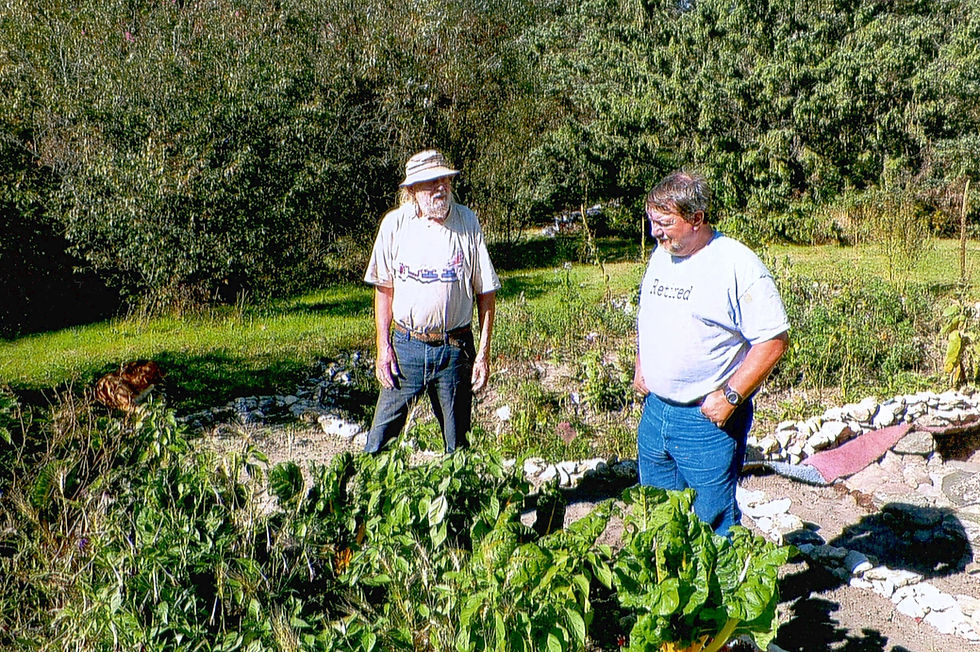
On March 23, 2026, Marcus Magnus Overseth sent me possibly the longest email I have ever received. It described his short but hot time in the gay liberation revolution. I knew I had to interview him. Also, his name was intriguing.
From his not-so-glamorous past in rural Minnesota to the radical activist front lines of gay liberation, Marcus Magnus Overseth's journey has followed an unlikely trajectory. In May of 1969, he co-founded one of the first gay activist groups in the United States, FREE (Fight Repression of Erotic Expression). In San Francisco, he participated in the pre- and post-Stonewall activist group, the Committee for Homosexual Freedom. He then got involved with the San Francisco Free Press; he edited the paper, sold copies on the street, and reported on protests. He published pieces that were historically significant, including “Homosexual Civil War,” which described the differences between the traditional, assimilationist organizations and the newer, militant, revolutionary energy of the gay movement. In February of 1970, he moved to Los Angeles and became a member of the Los Angeles Gay Liberation Front.
— August Bernadicou, Executive Director of The LGBTQ History Project
“When I was growing up, the pastor of the local church that my family was affiliated with sent me a long book on sexuality. We didn't really have any books at home until I got into seventh grade. My little school had four classrooms. I was so delighted when I got into seventh grade because I got a 1929 Webster's Unabridged Dictionary, along with a 1929 encyclopedia set. I was in hog heaven at that point.
I never thought being gay was a bad thing, but the aura or air of repression was very present during the end of the 50s and into the very early 60s. I do recall an incident—a couple of incidents—when I first walked into the locker room at Minneapolis Central High School. I was the only guy there who still had original equipment. Some of the guys were talking about Thursday being queers night, and I found out a few years later that some of them apparently were going down to the notorious cruising pickup spot—maybe a little bit of hustling—a place called Loring Park, close to downtown Minneapolis. There was another interesting observation: a beautiful young man in my gym class was being sort of personally attended to by a friend of his. Well, it wasn't directly sexual, but the connection should have been evident enough to me that I would have kind of awakened to the reality of the culture at that time. But being an ignorant country boy, I didn't really know how to approach anybody.
I didn't develop a friendship circle until a young lady of Irish extraction, very ebullient, with red hair, said, ‘Why don't you join the debate club? We need a senior in the debate club.’ I decided to join, and I became the captain of the Richfield High School debate team. We did our bit there, but I met a lot of people from different schools, which broadened my social network. By the time I had finished at school, I had become pretty political.
I dropped out of college, and I became part of what was the beginning of the hippie grouping, mostly, you know, cannabis on the West Bank campus of the University of Minnesota. I lived with Koreen, who was a lesbian, and another lady, Roxanne, who, well, shall we say, worked the streets a bit—it was a pretty liberated household. Together we started a group called FREE, which stood for Fight Repression of Erotic Expression. Koreen had come up with this notion of getting together a homosexual study group at the Coffeehouse Extempore, which was the main hangout for a lot of very liberated people. We were seeking individuals of all measures and types.
In our very first meeting, I mentioned that I had recently read The Erotic Minorities by Lars Ullerstam. That really woke me up, because I realized gayness was just one of the erotic minorities—Ullerstam walked into all of the various iterations that were out there at that time. So I took that to heart and said, ‘Well, you know, we need to, we need to create an organization,’ and having read that book, I came up with Fight Repression of Erotic Expression.
It was mostly a discussion group, but it had the potential for gay liberation, which is what I was looking for. One of our meetings had about 20-some people show up, some not in the college, some undergrads, and several grad students.
Koreen had been in touch with Leo Laurence in San Francisco, who started the Committee for Homosexual Freedom, which I believe was the first gay liberation group, founded in April of 1969, before Stonewall. I had contacted Leo Lawrence and decided to move to San Francisco in April of 1969.

Morris Kight, from the Los Angeles Gay Liberation Front, described San Francisco’s scene by saying Central Casting could not have come up with the number of characters in this bunch. It was true, there were some very, what shall we say, very liberated individuals from all parts of the country. Very few of them were from California, to say nothing of the Bay Area; there were a few, a handful of maybe a sixth of the group, who were native Californians and Bay Area people. It was a meeting of the minds.
We did a lot of street demonstrations and similar activities. The biggest one was when we had picketed the Hearst network at the San Francisco Examiner building on October 31, 1969, because of their homophobic reporting. A dozen of us were arrested and taken in by the San Francisco Police in paddy wagons. It was the first time I ever saw helmets on police officers.
There were around 20 of us altogether, mostly gay males, but maybe one lesbian and a couple of basically straight female friends of the group, and we were walking up and down, carrying our signs. We were shouting out slogans. Then all of a sudden, a plastic bag full of purple ink landed on the sidewalk. A few people got spattered a bit. Stevens McClave dipped his right hand in that ink and started making pretty purple handprints on the marble walls of the San Francisco Examiner building. The next thing we knew, a cop got his hand over Stevens’s shoulder and went in to arrest him, and then he put a hand on my shoulder. A dozen of us ended up getting busted that day, and the whole episode really went through the gay community in San Francisco. It was like a light bulb. It absorbed the vibe. All of a sudden, the CHF became pretty well known in the gay community in San Francisco, even though many in the community were members of the Society for Individual Rights (SIR). We also ended up picketing the annual drag ball on Market Street, which was put on by SIR. One of our picketers carried a sign that said, ‘Wear your gown all year round.’
My life has had a lot of synchronicity. Are you familiar with the concept? There was a matter of synchronicity: I happened to meet this guy who worked at a print shop in San Francisco's Mission District. It was at Turk and Market, and that was a very loaded area at that time, and it still is, but not quite the same now. It's deteriorated and devolved. We talked about my background, and he said, ‘I know these guys who want to change the San Francisco Free Press into a gay oriented, street paper,’ because there was nothing like that. I got involved. We printed an article on Pat Brown burning his SIR card. Many people were burning their draft cards at this time. We included an article titled 'Homosexual Civil War.' I sold copies on the street, and that’s how I made my income the whole period I was in California. We published a little bit of philosophical stuff, but mostly reportage on gay liberation. It was basically the house organ for the CHF.
I moved to Los Angeles in February of 1970. I got involved with the Los Angeles Gay Liberation Front. The first picket I did with them was at Barney's Beanery on February 7, 1970. Barney’s had this sign that said, ‘Fagots Stay Out.’ A few weeks later, we did a picket of the Spanish consulate, because their Franco government was still very homophobic, so we picketed them. On Easter, we picketed a Baptist church at Hollywood and Vine. There has always been this split in the gay community between the more conventional types and those who are cultural radicals.”
Related Stories
About The LGBTQ History Project
The LGBTQ History Project is a 501(c)(3) nonprofit preserving the lives and legacies of LGBTQ+ activists from the first wave of gay liberation through oral histories, archives, and the QueerCore Podcast.


Comments