

JAMES MARTIN
Updated: May 11
JESUIT, AMERICA MAGAZINE, OUTREACH
The LGBTQ History Project has featured several radical Christians who fought—yes, fought—to advance LGBTQ rights. Looking back at US history, we can start with the Council on Religion and the Homosexual (CRH), which was a San Francisco, California, organization established in 1964 for the purpose of joining religious leaders with gay activists. Here is our article on Reverend Robert Cromey, who co-founded the organization. There is also Reverend Troy Perry, arguably the most important LGBTQ Christian on a gay liberation level. He started the Metropolitan Community Church in 1968, before Stonewall. The Metropolitan Community Church is the largest of its kind, with over 170 churches. How could we forget Adrian Ravarour, a Mormon priest, who founded the street organization Vanguard in 1965? Check out Paul Breton and Robert Clement. We must plug Reverend Ray Broshears, whom we cannot interview because he died of AIDS in 1982. Ray Broshears was a gay Pentecostal evangelist and activist who founded the Lavender Panthers, an armed LGBTQ self-defense group in San Francisco in 1973–74.
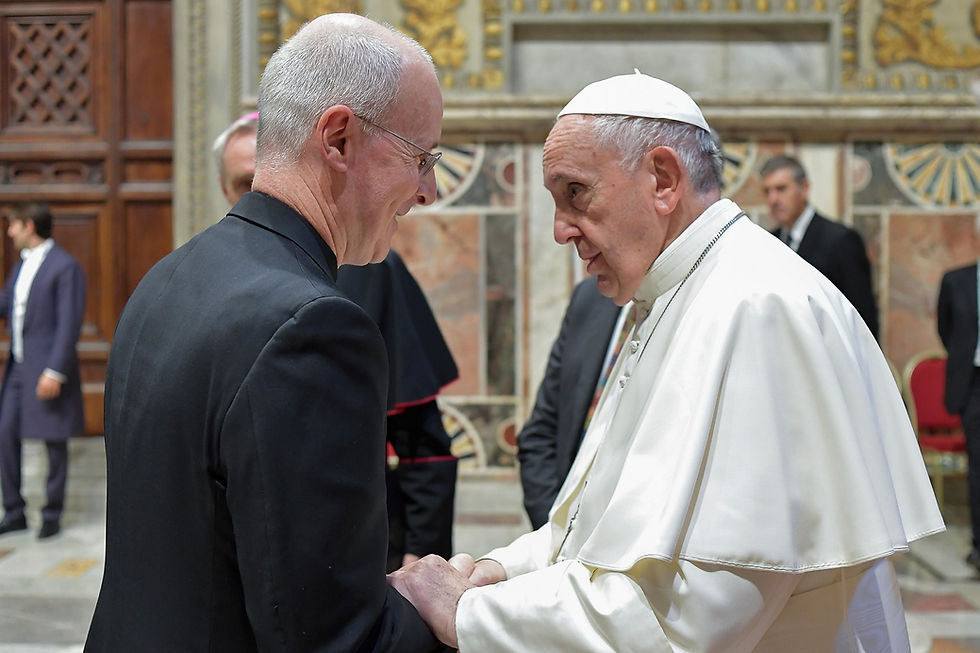
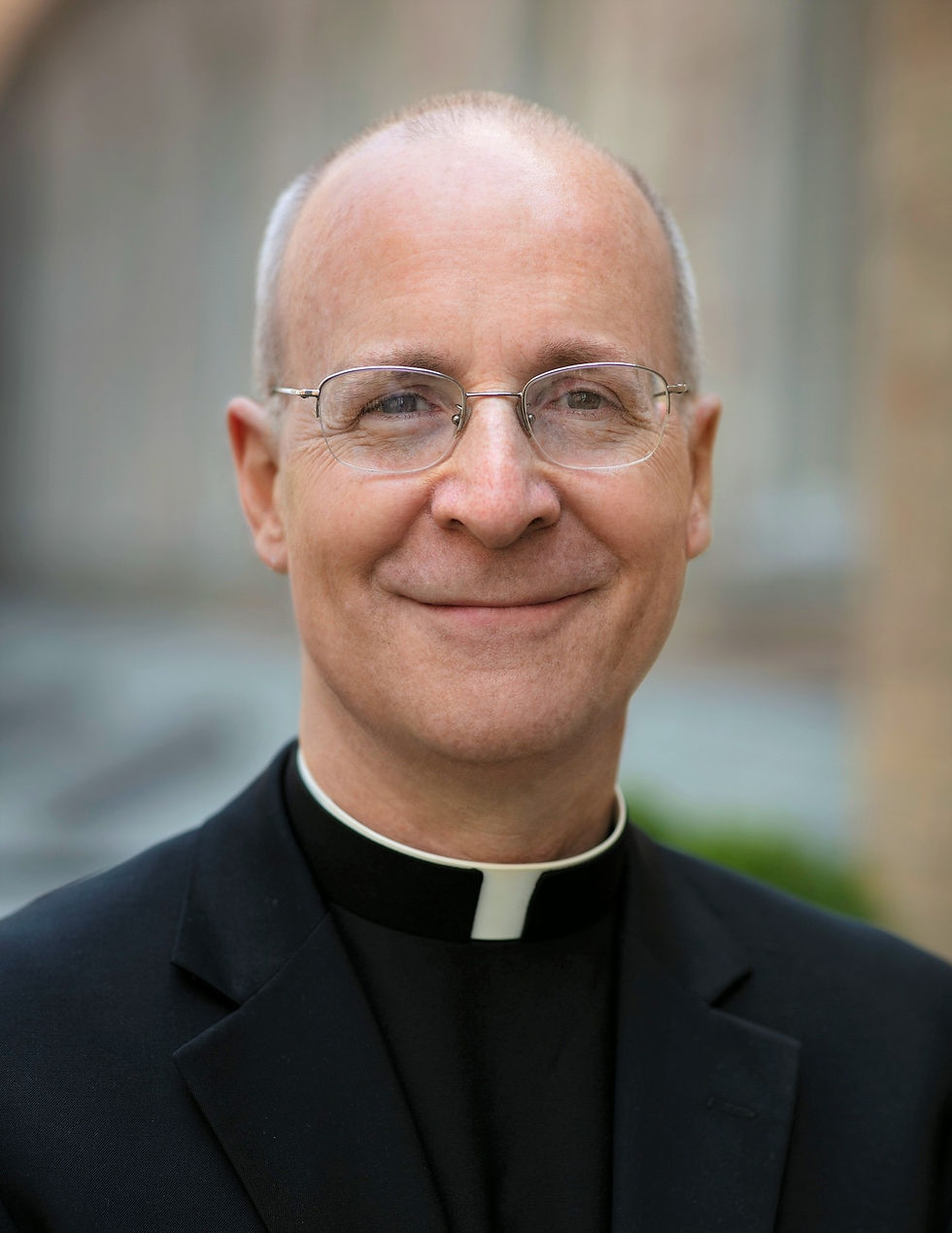
Now we are looking to the future and bringing you Father James Martin, an American Jesuit priest, writer, editor-at-large of America magazine, and founder of Outreach. He is a Cutting Edge Catalyst, an honor bestowed by LGBTQHP on young trendsetters and tastemakers making a cultural impact. He has worked to reach out and show compassion for others through his ministry, helping people within the church better understand one another and LGBTQ people as an oppressed minority. With hundreds of thousands of followers on social media, he has received both considerable support and tremendous criticism for his efforts. He collaborated very closely with Pope Francis as part of his ongoing efforts to help establish the relationship between faith and inclusion in the world. When asked what percent of his work is dedicated to LGBTQ ministry, he said, “40%.” That is a lot more than most people. Thank you, Father James Martin.
— August Bernadicou, Executive Director of The LGBTQ History Project
“I grew up in a suburb of Philadelphia. It was very Brady Bunch: my dad worked, and my mom was mainly a homemaker and a substitute French teacher—typical 1960s, 1970s boyhood and adolescence.
It was also a time of racism, misogyny, and homophobia, and I grew up in a mainly white neighborhood. I didn't experience anyone who was racist. I didn't hear any racist things growing up, thank God. But I don't think the 60s were perfect for everybody. Our family had our struggles, as every other family does.
We went to the city when I was young for big occasions, like visiting Santa Claus around Christmas time, maybe to go to Independence Hall for a field trip, or the Franklin Institute, somewhere like that. When I was a teenager, I would go for fun, just to explore the town. I went to the University of Pennsylvania in Philadelphia for college.
I wouldn't say I was sheltered. I certainly wasn't religiously sheltered or anything. I grew up with Protestants and Jews—all sorts of people. My father also traveled a lot for his business. He would go to places like Japan, Indonesia, and Pakistan. We sort of understood those cultures, too.
When I was growing up, the antigay slurs were who was a fag or who was a fairy or who was queer. It was used against boys who were seen as not macho—really against all boys. We didn't talk about that a lot growing up. My dad might say that someone was a sissy, or you don't want to be a sissy. Mostly just sort of not wanting to be with people like that. I didn’t know anyone who was out.
The consequences of being gay? That is like saying, ‘What are the consequences for having wings and being able to fly?’ I didn't know anyone had wings and was able to fly, and I didn't know anyone who was gay. I think being thought of as a sissy was more about being effeminate. That makes sense. The consequences were bullying, name-calling, ostracizing, those kinds of things—probably the same as now for kids.
Part of the reason I entered the priesthood was that I saw a documentary on TV about Thomas Merton, the Trappist monk—it really just stopped me in my tracks. It led me to read his autobiography, The Seven Storey Mountain, and then another book in which he asked: why do we do things that were not made for us? Why do we do things that are the opposite of what we made for? So I thought, yeah, that's me. Like, what do I want? Why am I in business? Being a monk and being a priest just seemed more beautiful. It's really romantic. It had pluses and minuses. But initially, I think that's the way God draws you—through this attraction.
My parents were horrified when I told them I wanted to be a priest. I worked for General Electric for six years in the 1980s. I was making a lot of money. My parents wanted me to do well in the business world, and they said we wasted all this money on your college education. I paid for it as well. They thought I was joining a cult. They didn't know much about the Jesuits. They didn't know much about the priesthood. They were horrified. They were not going to have grandchildren.
It's actually very freeing, to be honest. It's very freeing because all the money I make from my salary at America magazine, plus the money I make from my books and whatever else I do, goes to the Jesuits. I'm here in this house, and we have food and stuff like that. It’s actually very free. I also don't have to worry if my books don't do well financially. I'm not relying on that. So if a book does well, great. The Jesuits get more money. If it doesn't go well, okay, I'm not out of a job. It's very free. I mean, some things pinch—I don't have a car, so it's kind of hard to get to places. I can't buy a nice present for somebody. I can't just take a trip and go somewhere. But for the most part, we're taken care of. I would say it's more reliance on Jesus as someone who understands what it means to be attacked, right?
Any religious organization is going to be filled with saints and sinners. It's human. So any religion, whatever it is, you're going to have people who are holy and wonderful and admirable and beautiful, and you're going to have people who are jerks and hateful. It's just that's human nature. I think the search for a religious community without any sinners is a search without end. So it's understanding the good and the bad, and in the religious community, that's different from the faith.
I would say that Jews and Christians will find a basis for that understanding in the Bible, in passages where translations are open to various interpretations. Still, certainly, translations in the modern age have been against homosexuality. So they look, and they say, ‘This is an abomination.’ I think that permits them to see their homophobia as justified. Right now, there are all sorts of other things that are in the Bible that we don't talk about, right? And there are lots of things in the Bible, from the Old Testament, that we don't do. For example, I sometimes say to people, ‘Well, do you think women should be stoned for committing adultery?’ It's like, no, of course not. ‘Do you think we should have slavery?’ No, of course not. Well, why not? It's in the Bible. We think about these things differently. But when it comes to homosexuality, we become literalists. So they use that as an excuse to be homophobic, which is cultural in many ways, but it's also the sense of the other. We don't want to be part of that group, and the person who's considered other is always the scapegoat and always kind of persecuted and marginalized. So religion can give people the sort of scaffolding on which to stand and throw rocks.
I knew LGBTQ people, but it was the Pulse nightclub massacre in 2016 that really changed things, and I realized that the response from the bishops was really paltry and really kind of wanting. So I did a Facebook video saying that politely, and that led to a talk, which led to a book called Building a Bridge, which led to lots of positive feedback and lots of invitations to parishes—standing-room-only crowds, but then it led to a lot of pushback, and that was pretty discouraging, because it was really personal and pretty hateful. I was invited to speak at the Vatican's World Meeting of Families in 2018. It was the first time that the Vatican had used the term LGBTQ in a public way, at least in a sort of general public way. And then I met Pope Francis in 2019, so it all happened pretty fast.
Pope Francis did more for LGBTQ people than all of his predecessors combined. He's the first pope ever to use the word gay. He appointed an openly gay man to a papal commission. He met with people who worked with LGBTQ people like me. He said that parents should not kick out their kids who are gay. He called for the decriminalization of homosexuality. One thing I like to remind people is that while this stuff in the West might not seem like a big deal, it's a big deal in Africa and Eastern Europe, and it has caused a lot of controversy. Pope Francis approved the publication of a document called Fiducia Supplicans, which allowed for priests to bless same-sex couples under certain conditions. In Africa, they were horrified by that. So he really, really took a lot of risks, and I think Pope Leo is going to continue that. In fact, I met with him for about half an hour in September, and that was the message I got from him: he wanted to continue that message of welcome and inclusion.
At the parish and diocesan levels, there are cardinals, bishops, and priests who have spoken about it. So there are many places where that's happening. I work with a group called Outreach. We have a website and host conferences, retreats, and pilgrimages. Some places don't want to do it. If you go to Sub-Saharan Africa or Eastern Europe, they're not doing that, and they think it's an ideology. I was at the Synod of Bishops at the Vatican in 2023 and 2024. I met with cardinals, bishops, and archbishops who were very upset with LGBTQ ministry and thought it was an ideology. They thought it was disgusting, it was unnatural, all that kind of stuff. The church mirrors the cultures in which it exists. So if it's in a culture that's pretty homophobic, it's not surprising that the parishioners and the priests and even the bishops might be homophobic as well. The pushback is part of the ministry. It's not extrinsic to it.
I get a lot of death threats, hate, online attacks, canceled talks, protests, petitions, and even people saying comments to my face. So I have to remember that it's part of the ministry. I'm getting more okay with it. Pope Leo said something the other day about same-sex blessings, blessing same-sex couples, and I understood it in a particular way. What he was saying was that basically, nothing is changing from what Pope Francis said, and we're not going further. That's what he said, because it would break the church. He is right.
People went crazy. Progressive people went crazy. ‘He's not going far enough.’ ‘This is full of hate.’ Someone wrote that people on the more traditional side said, ‘This is crazy.’ ‘He should have stopped same-sex blessings.’ I wrote a comment and posted it on Facebook, TikTok, and X, and I didn't look at the responses. I don't mean that arrogantly, but I feel like, you know, I don't need to look at all this hate on social media. Most people appreciate it, but on X, it's just a cesspool, and most people don't know what they're talking about. I put these things out. I do these things. If it is good, legitimate criticism from thoughtful people, I’ll listen to that. For the most part, I don't listen to these crazy, hateful people. ‘You’re a demon,’ that kind of stuff. That's what people say sometimes, and I'm not going to listen to that stuff.
These people really believe, from reading the Bible, that this is wrong. They think that they're prophets. You have to be forgiving. Jesus forgave the people who crucified him on the cross, so it's a pretty high standard. I try to forgive the bullies. I also don't hold a grudge in that way. I can't think of anybody I'm still angry at for opposing me. I have bigger things to do. That makes sense. Some people have protested me and written articles about my work, and even cardinals and bishops, but I'm not sitting here feeling a sense of rage against them. I kind of move on.
I told Pope Francis that so much of it depends on where you happen to live. If you're a young LGBTQ person and you happen to live in New York, guess what? You're very lucky. You're blessed. You have a dozen parishes you can go to that have LGBTQ ministry. If you're living in the Midwest, in some small town, and your pastor happens to be homophobic or transphobic, you're not so blessed. The problem is that there aren't enough resources everywhere. That's one of the things we're doing with Outreach: making the resources available and hosting regional events.
I'll tell you a story. I was on a retreat once, a few years before I started this LGBTQ ministry, and I was praying over a passage called ‘Jesus Rejected at Nazareth.’ You may not be familiar with it. Jesus stands up in the synagogue at Nazareth, his hometown, and preaches about being the messiah. The crowd turns on him and chases him to the brow of the hill, and they're going to throw him off the hill. They want to kill him, basically, which we tend to gloss over. I was on this retreat and thought about Jesus's experience. So I thought, well, he was in his hometown, right? He knew all these people, right? So how was he able to stand up and do these things? The words I heard in prayer, not sort of physically heard, but the words that came to me in prayer were Jesus saying to me, ‘Must everybody like you?’ I felt like no one needed to like me. You know, this desire to be liked and loved and approved of. I think, to do that kind of work, you have to be free of the need to be loved, liked, or approved of. You just do it because people are gonna hate you.
There was one guy at the synod, this big meeting, who refused to sit next to me. We're all supposed to be talking. He said, ‘I’m not sitting next to him.’ He pointed his finger at me, stuck it in my chest, and told me I was paying people to be gay. I said, "You know, your Excellency, I don't know about people being paid to be gay. I don't know what could happen. I don't know. Maybe there are people over there who are paying people to be gay, but you must admit that this is happening in nature.’ ‘No, it's not. It's unnatural. It's unnatural.’ ‘Well, it's happening.’ ‘No, it's a choice, it's an ideology, and it's all from the West. We don't have it, and it's disgusting. Stop foisting this colonial idea on us. You are the colonizer,’ and what do you say to that? Right? You are forcing a Western idea on Africa; you are colonialists. Stop it now. What do you say to that? It's a hard thing to talk about, and I kept saying, ‘No, it's natural.’ ‘No, it's not. It's not. It’s disgusting. It's in the Bible; it's disgusting. It's an abomination.’ They think they're doing a good thing. They think they are defending themselves against all sorts of sinfulness and depravity. That's what they think. They really think that. They think that any move to sort of help them understand LGBTQ people is just a slippery slope, and they said that to me. So it's very easy for me to understand that after spending time with these people. What changes people the most is knowing gay people, particularly in your family.’
Related Stories
About The LGBTQ History Project
The LGBTQ History Project is a 501(c)(3) nonprofit preserving the lives and legacies of LGBTQ+ activists from the first wave of gay liberation through oral histories, archives, and the QueerCore Podcast.


Comments